Understanding Beta HCG Levels After IVF
Pregnancy can feel like a roller coaster. After IVF, there is a lot of wait and worry. The usual question is, “Am I pregnant after IVF?” To answer this, doctors check a hormone called Beta HCG Levels.
Beta HCG (Beta Human Chorionic Gonadotropin) levels means the amount of hormone made by your body. And it happens as soon as an embryo starts growing in the womb. It is measured in your blood. Results assure if the pregnancy has begun and how it is going. It is like checking a baby’s heartbeat even before it is visible. Let us now share how knowing your beta HCG level for pregnancy in IVF will make you worry less and enjoy this phase more.
Beta HCG Levels by Day Chart
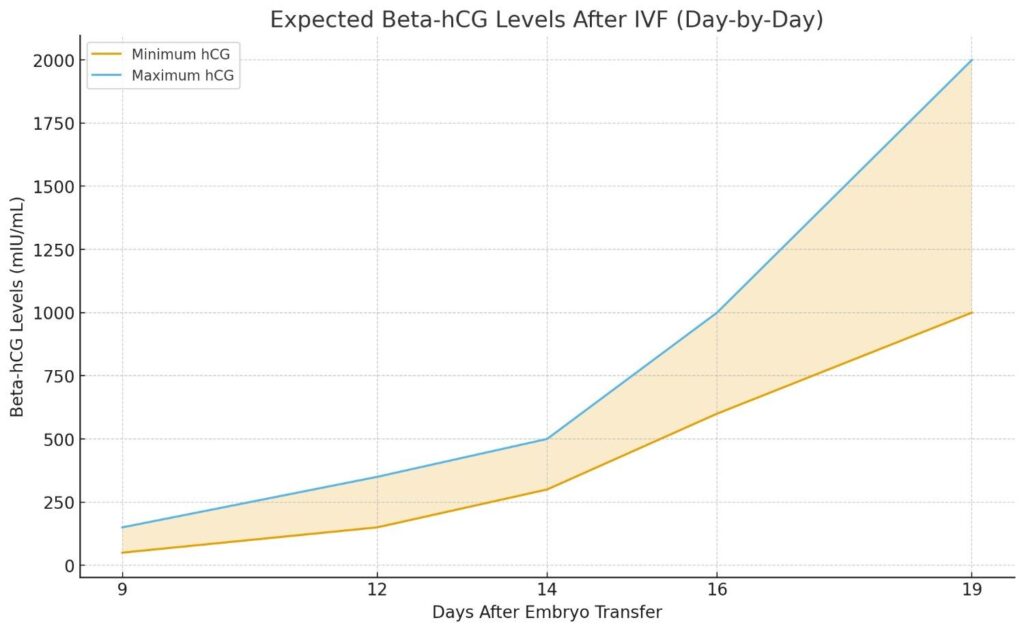
Everyone is different, so these numbers are averages, not exact rules. What matters most is how fast the hormone rises. In early pregnancy, it should roughly double every two to three days.
| Day After IVF Transfer | Typical Beta HCG Levels (mIU/mL) | What to Expect |
| Day 9 | 50+ | Early sign of pregnancy; rising Beta HCG Levels are reassuring. |
| Day 12 | 150+ | Numbers should roughly double; check pattern, not just single reading. |
| Day 14 | 300–500 | Steady rise confirms implantation; start monitoring HCG levels for IVF. |
| Day 16 | 600–1000 | Rapid rise may indicate twins; compare with twins beta HCG levels expectations. |
| Day 18–20 | 1000+ | Strong growth is good; doctors track using HCG levels by day chart. |
Tip: Slow rise may mean that the embryo is not growing well. Or the case could be of an embryo growing outside the womb.
What is a Good Beta HCG Level for Pregnancy in IVF?
Many women ask, “What is a good number after IVF for a healthy Beta HCG Level for Pregnancy? The answer is, it should keep rising. Doctors watch how fast it grows, not just the number. Some women may have lower HCG levels for IVF and still have a healthy baby. Steady growth shows the embryo is implanting. Watching the Beta HCG Level for Pregnancy in IVF helps doctors know the pregnancy is healthy.
Understanding Low and High Beta HCG Levels
-
- Low numbers - mean the embryo is not growing well. It can also mean the pregnancy is outside the womb.
-
- High numbers are mostly good, meaning a healthy baby has begun developing
-
- Very high numbers may show twins or triplets.
-
- Rarely, very high numbers point to rare problems like a molar pregnancy.
Numbers alone do not tell the full story. Doctors watch how Beta HCG Levels rise over days. All HCG levels for IVF are important. Steady growth shows the baby is safe. Doctors guide you using beta HCG level for pregnancy in IVF every step.
Twins Beta HCG Levels After IVF
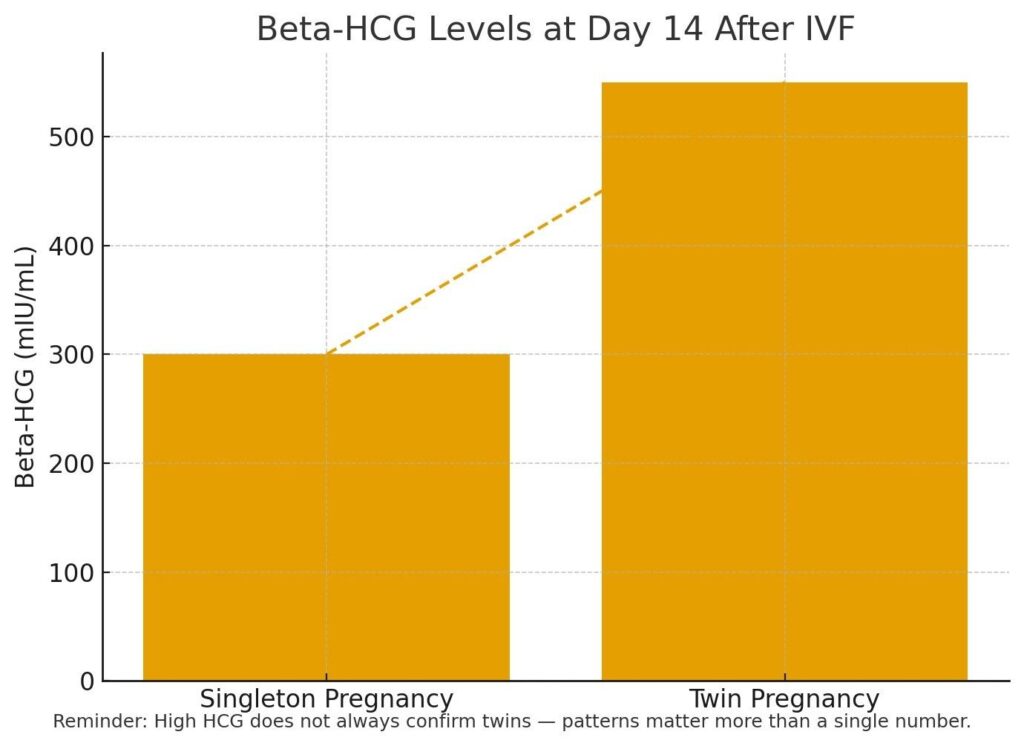
What is important is steady growth. But then…
-
- Two embryos make twins beta HCG levels rise faster.
-
- Single baby around 300 mIU/mL at day 14.
-
- Twins may show 500–600 mIU/mL at same time.
-
- A high number does not always mean twins.
-
- Some women naturally have higher hormone levels.
The twins beta HCG levels help doctors anticipate multiple pregnancies and prepare appropriate care. This information also helps families understand what to expect, especially when using a frozen embryo. Seeing a higher number early does not always mean complications-it just shows more activity.
HCG Blood Test vs Urine Test
Blood test - Measures exact Beta HCG Levels. Faster and more accurate.
Urine test - Simple home check. Less precise, slower to detect early.
Factors That Influence Beta HCG Levels
Two ovens at the same heat cook differently. Your body makes more or less hormones, just like ovens cook differently.
-
- Your age matters. Older women may make less hormones.
-
- The embryo’s quality matters. Strong embryos grow faster.
-
- The day of transfer matters. Timing changes results.
-
- Your body absorbs hormones differently. Some take more, some less.
-
- Medicines can change hormone numbers. This is normal.
-
- Doctors do not rely on one test. They watch the pattern.
When to Repeat the Test and Next Steps
This is like checking water levels in a slowly filling tank. The consistency matters more than a single reading. Repeating tests gives clarity and helps families plan the next steps with confidence.
-
- Repeat blood test after 48 hours
- Check if Beta HCG Levels are rising
- Doubling numbers show healthy pregnancy
- Slow rise may need extra tests
- Early ultrasound if numbers stay low
- Doctors guide next steps carefully
- Follow advice for safe pregnancy
- Repeat blood test after 48 hours
Why Prefer Asian IVF to Test Your Beta HCG Levels?
Because it tells the first story of your pregnancy. At Asian IVF, we watch these numbers closely. We guide, protect, and act fast. Don’t risk waiting. Don’t wait if numbers are unclear. The HCG levels by day chart can show problems early. Twins beta HCG levels may rise fast, but patterns matter more than one number. HCG levels for IVF need careful monitoring. Your beta HCG level for pregnancy in IVF is a signal-trust it. Call Asian IVF today. Get clarity. Stay safe.
FAQs About Beta HCG Levels After IVF
1) Can spotting or light bleeding happen even if beta HCG Levels are normal?Yes, but it doesn’t always mean a problem. Your beta HCG level for pregnancy in IVF may be perfectly fine. Early implantation can sometimes cause minor bleeding.
2) Do higher beta HCG Levels always mean a healthy baby?High Beta HCG Levels can’t guarantee everything is perfect. Even normal numbers can occasionally hide issues, which is why doctors monitor trends.
3) Can beta HCG rise slowly and still result in twins?Many think twins always show very high twins beta HCG levels, but sometimes twins can have slow-rising numbers early. Ultrasound later gives the real answer.
4) Do medications in IVF change HCG levels by day chart?Absolutely yes, but that doesn’t always reflect the embryo’s health. Doctors always interpret in context.
5) Can stress or diet affect beta HCG Levels?Surprisingly, mild stress or what you eat does not change beta HCG level for pregnancy in IVF in the first two weeks. The hormone mainly comes from the embryo and placenta, not your daily habits.