Embryo Glue in IVF: Can It Increase Your IVF Success?
When it is time to transfer your embryo during IVF?/ICSI, you may have many questions about what happens next.
“Will my embryo implant?”
“Is there anything that can support implantation?”
During this conversation, your fertility specialist may mention an option called Embryo Glue as part of the transfer process.
Your IVF/ICSI cycle has recently failed, and you come across a reel saying that “Embryo Glue”.
But the name can be confusing. “Is it actually glue that sticks the embryo to your uterus?” Not exactly. Embryo glue is actually media which is used during embryo transfer.
Let’s address the big question: “Can embryo glue really increase implantation or IVF success.
What is Embryo Glue?
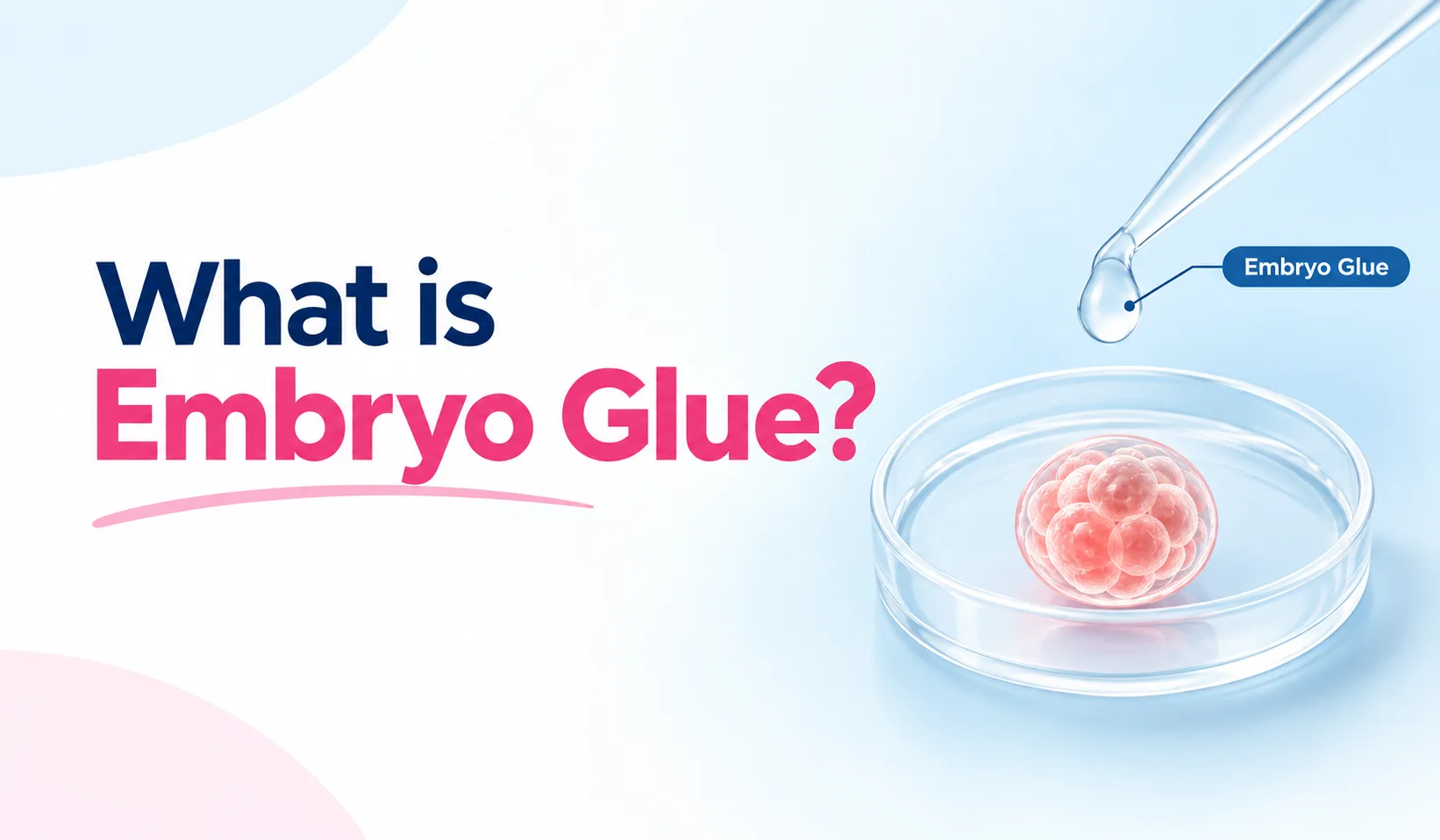
The term embryo glue is a brand name for a medium that is used in an IVF add-on procedure to support embryos around the time of transfer. It was introduced by the company Vitrolife in 2003.
Mainly contains Hyaluronic Acid (HA), also called hyaluronan; that's why it's also called a hyaluronan-enriched transfer medium.
But what is hyaluronic acid?
According to a 2025 review published in Pharmaceutics, HA is naturally present in the female reproductive tract, including the uterine lining. Around implantation, it helps create a supportive environment for interactions between the embryo and endometrium.
So you might wonder: if it is already present in the body, what makes Embryo Glue different? And how does it work?
The key is its higher concentration of HA.
It is a natural sugar molecule that becomes thick at the time of implantation. It acts as a biological bridge, binding to a special receptor on the embryo cell surface (CD44) and interacting with molecules on the endometrial lining.
Also, its thick, gel-like texture matches the natural uterine fluid, which minimises the risk of the embryo drifting.
The term embryo glue came from an amazing marketing team where they observed that a lot of IVF clinics are attributing IVF failure to sticking.
According to Dr Vedant Jain, IVF Consultant & Gynaecologist at Asian Institutes of Infertility Management,
“We always tell our patients that it is not a physical adhesive or magic glue that can guarantee that an embryo will implant or that IVF will result in pregnancy. It is just an add-on procedure to IVF.”
Who May Benefit From Embryo Glue?
“If Embryo Glue is supposed to support implantation, does every IVF patient need it?”
Not necessarily. Embryo Glue is an optional IVF add-on, and current evidence does not show a clear benefit for every patient.
At the 2026 ESHRE Annual Meeting, researchers presented a recent multicentre randomised trial involving 865 women undergoing single blastocyst transfer.
Live birth occurred in 51.5% of women who received EmbryoGlue.
Live birth occurred in 47.7% of women who received a standard transfer medium.
In simple terms, this study did not show a clear improvement in the chance of having a baby with EmbryoGlue.
So, where does Embryo Glue fit into an IVF treatment plan?
A 2023 study published in Frontiers in Endocrinology involving 248 patients with recurrent implantation failure found that hyaluronic acid-enriched transfer medium was associated with a higher clinical pregnancy rate.
Therefore, Embryo Glue may be mildly beneficial if you have recurrent implantation failure (RIF) or a thin endometrium. But its benefit in other IVF cases is still controversial.
Embryo Glue Procedure: How It's Used During Transfer
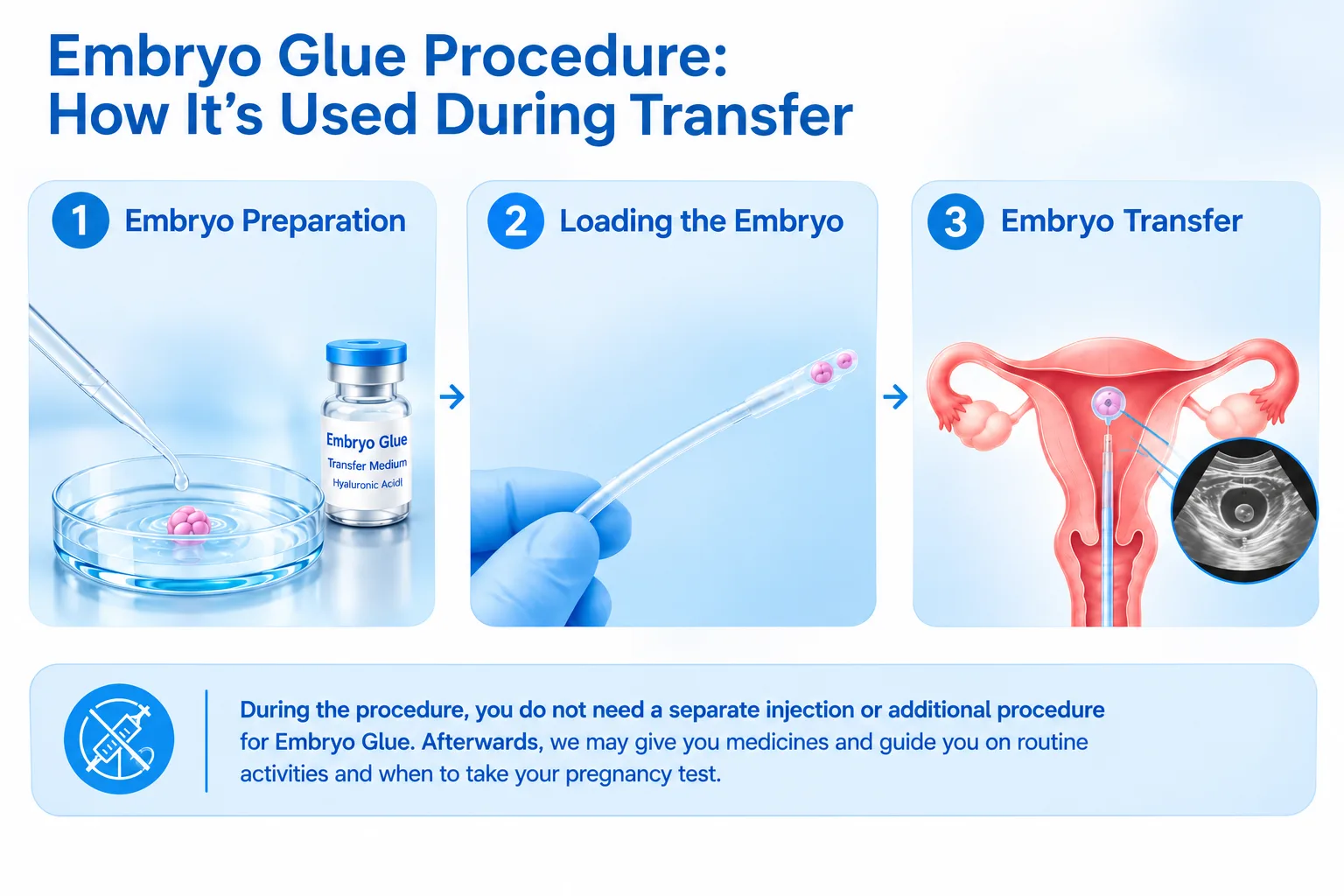
The process is quite similar to a regular embryo transfer. The main difference is how we prepare your embryo before placing it in the uterus.
Embryo Glue Procedure:
Embryo Preparation: Our embryologist places the selected embryo in Embryo Glue transfer media for at least 20 to 30 min before embryo transfer.
Loading the Embryo: We carefully place your embryo, along with a small amount of embryo glue medium, in a thin, flexible embryo transfer catheter.
Embryo Transfer: We gently guide the catheter through your cervix and place the embryo inside your uterus, using ultrasound to guide the transfer.
During the procedure, you do not need a separate injection or additional procedure for Embryo Glue. Afterwards, we may give you medicines and guide you on routine activities and when to take your pregnancy test.
Embryo Glue Pros and Cons: The Practical Side
If you are considering Embryo Glue, you may wonder whether adding it to your IVF cycle gives you extra benefits. So, here are the practical points to know.
Advantages of Embryo Glue
A choice after unsuccessful transfers: Your doctor may discuss it with you after previously unsuccessful embryo transfers.
No additional procedure: It is part of the embryo-transfer method and usually doesn't require another hormone injection or extra recovery time.
Can be used in different cycles: Based on the protocols at the clinic, it can be used in the case of fresh or frozen embryo cycles.
Disadvantages of Embryo Glue
Not guaranteed: It doesn’t help improve poor embryo quality, uterine receptivity or other health conditions.
Effects are still not clear: Research outcomes are mixed.
Extra fee involved: Although it can be an extra procedure in IVF, it may require an additional payment.
Limitations for all: Your doctor may recommend it based on your treatment and history.
Embryo Glue Cost in India
The cost of Embryo Glue can vary between fertility centres in India. Before taking treatment, always check the cost with your clinic.
Factors that Influence the Cost:
The city and hospital where you are getting treatment
Embryo Glue treatment may be included in your IVF package or may be charged separately
Cost is affected by the suppliers of Glue to IVF clinics
Embryo Glue IVF Success Rate
Many couples search Google for Embryo Glue IVF Success Rate, hoping to learn how much it can improve their chances. But there is no single success rate that applies to every IVF patient.
“ Embryo Glue supports implantation and establishes pregnancy, but implantation itself is a complex biological process. It depends on factors such as embryo quality, endometrial lining, age, and your overall reproductive health. Therefore, your fertility specialist may consider all these factors together rather than relying on Embryo Glue alone when discussing your chances of IVF success. A successful IVF is simply placing a healthy embryo at the right time (window of implantation) & not depending on Embryo Glue. ”
- Dr Vedant Jain IVF Consultant & Gynaecologist
Is Embryo Glue Right for You?
There is no need to choose Embryo Glue simply because it is available. Before adding it to your IVF cycle, have a clear conversation with your fertility specialist.
Ask your doctor:
What could have affected my previous IVF outcome?
Is there a specific reason to consider Embryo Glue for me?
Is my uterine lining adequately prepared?
What will be the additional cost?
Our goal is not to add every available IVF option, but to choose the ones that have a reasonable purpose in your particular treatment.
Final Thoughts
We understand that every embryo transfer carries a lot of hope, especially after a long and emotional IVF journey. Successful IVF is about transferring a healthy embryo at the right time, when your uterus is ready for implantation. While add-ons such as Embryo Glue may be discussed in some cases, their role in improving IVF outcomes remains limited. It is an extra option your doctor may suggest during IVF. Whether you need it depends on your treatment and individual situation.
If you have concerns about Embryo Glue or your IVF treatment, our fertility team at Asian Institute of Infertility Management, Indore, can help you understand your options and guide you through the next steps.
Frequently Ask Questions
1. Can Embryo Glue improve the chances of IVF success?
Embryo Glue may support the embryo implantation process in some IVF patients, but it does not guarantee a successful pregnancy. IVF outcomes depend on several factors, including embryo quality, age, endometrial condition, and overall reproductive health.
2. What is the success rate of IVF with Embryo Glue?
There is no fixed success rate. IVF outcomes depend on factors such as age, embryo quality, and uterine health. Embryo Glue does not guarantee implantation or pregnancy.
3. Is Embryo Glue recommended for every IVF patient?
No. Embryo Glue is optional, and your fertility specialist can advise whether it suits your treatment needs and medical history.
4. Who may benefit from Embryo Glue during IVF?
Embryo Glue may be discussed for patients who have experienced previous unsuccessful embryo transfers or implantation-related challenges. However, there is no guarantee that it will improve outcomes, and its suitability depends on the individual's treatment history.
5. Can Embryo Glue harm the embryo?
Embryo Glue is designed to support the embryo during transfer and is generally considered safe when used appropriately. However, its suitability depends on individual circumstances, so discuss any concerns with your fertility specialist.
6. Are there any risks or side effects of using Embryo Glue?
Embryo Glue is generally considered safe, but individual risks may vary. Your fertility specialist can guide you based on your treatment.