Menopause Symptoms & Stages Explained: Early Signs, Age & Treatment

“What is menopause and how long do menopause symptoms last?”
“What are the early signs?”
“I planned a pregnancy in my 40s. What are my options now?”
These are some of the most common questions women ask as they enter their 40s and experience hormonal changes.
Menopause is a natural life transition, yet one that remains poorly understood. On average, women spend nearly one third of their lives in perimenopause, menopause and postmenopause.
Despite this, awareness and medical guidance around this phase remain limited, often leaving women confused, anxious or unsupported, particularly when fertility decisions are still pending. If motherhood is still a hope, this guide on getting pregnant after 40s explains what is medically possible and what steps truly matter.
As an IVF and women’s health centre, we meet many women who struggle with symptoms or assume their experiences are “normal” and untreatable. With timely, personalised care, menopause can be a healthy and empowering phase of life.
We will now share how understanding menopause age range, recognising Perimenopause signs and managing menopause side effects with timely care ensures long-term wellness.
What Is Menopause?
Menopause means the end of menstrual cycles. Menopause is diagnosed when a woman has not had a menstrual period for 12 consecutive months, without pregnancy, illness, or medication as a cause. It is not a sudden event but a gradual hormonal transition, much like a system slowly powering down.
Symptoms often begin years earlier due to hormonal imbalance or declining estrogen levels, leading to changes in sleep, mood, temperature regulation and overall well-being.
Menopause Age Range -When Does It Start?
Menopause does not begin at the same age for every woman. Each one has different genetics, lifestyle, ethnicity, medical history and environmental factors. So the age varies:
- Most women enter menopause between 45 and 55.
- Some notice early transitions in their early 40s.
- The average age of menopause for women globally is around 51.
- In India women may reach it slightly earlier, often between 46–50.
Globally recognised health bodies like the Mayo Clinic and WHO highlight menopause as a natural life transition that benefits from early awareness and medical guidance, especially as symptoms and timelines can vary widely.
A Complete Overview of Various Menopause Stages
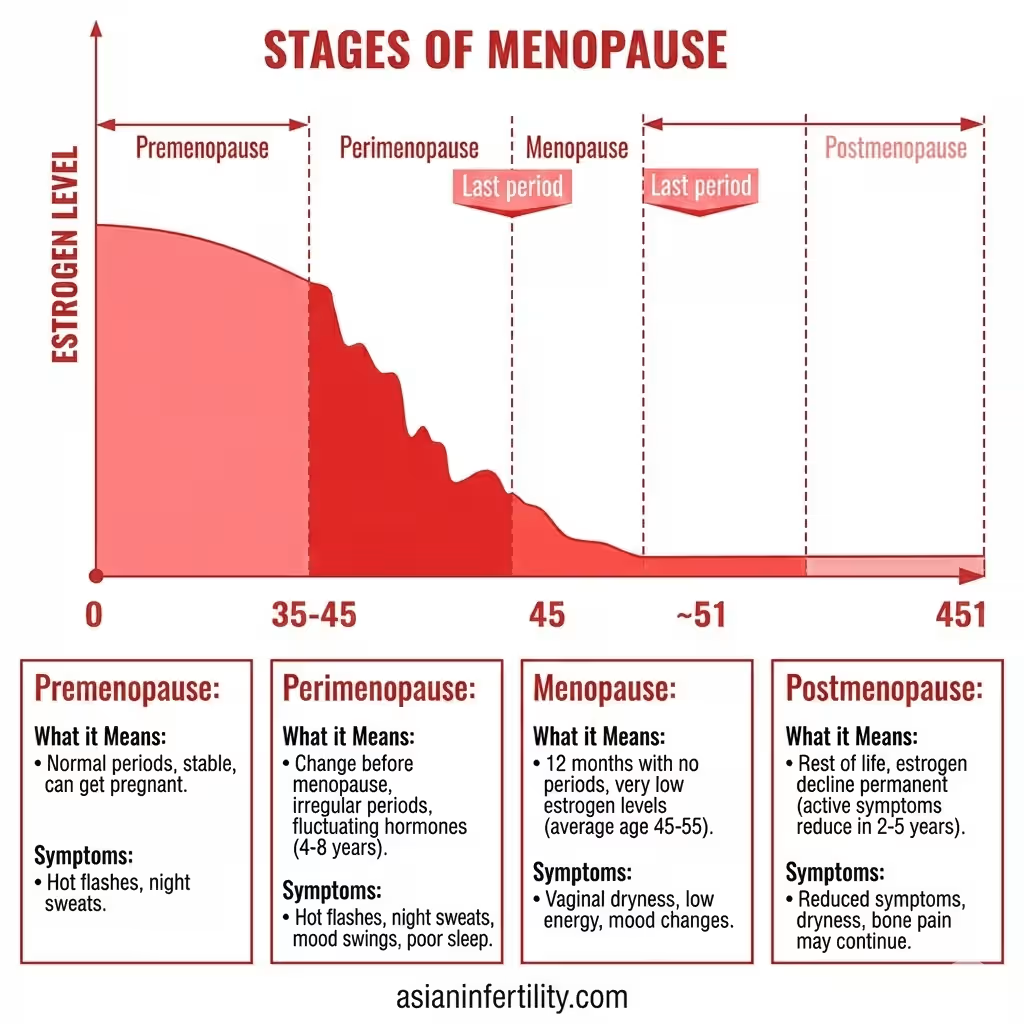
| Stage | What it Means | Common Body Changes | Important Things to Know |
| Premenopause | This is the time when a woman is still having normal periods. Hormones are stable and she can get pregnant. | No major changes. Energy and mood are usually normal. | The time before any menopausal symptoms begin. |
| Perimenopause | This is the “change time” before menopause. Periods become irregular. Body hormones (like AMH) start going up and down. Perimenopause can last 4–8 years. | Hot flashes, night sweats, mood swings, poor sleep, irregular periods. | This stage can start even in the menopause age range of late 30s or 40s. |
| Menopause | Menopause itself (the transition) is usually around one year. A woman has no periods for 12 months. Hormone levels (especially estrogen) become very low. | Hormonal changes, vaginal dryness, low energy, mood changes. | Average menopause age range is around 45–55. Strong menopause symptoms for women arise. |
| Postmenopause | Postmenopause lasts the rest of life, though active symptoms often fade within 2–5 years. | Symptoms may reduce, but dryness and bone pain may continue. | This is the final stage when estrogen decline is permanent. Knowing how long menopause lasts helps reduce worry. |
Signs of Menopause at 40
There are two kinds of changes a lady's body goes through during menopause - physiological as well as sexual. And accordingly are the symptoms the body gives:
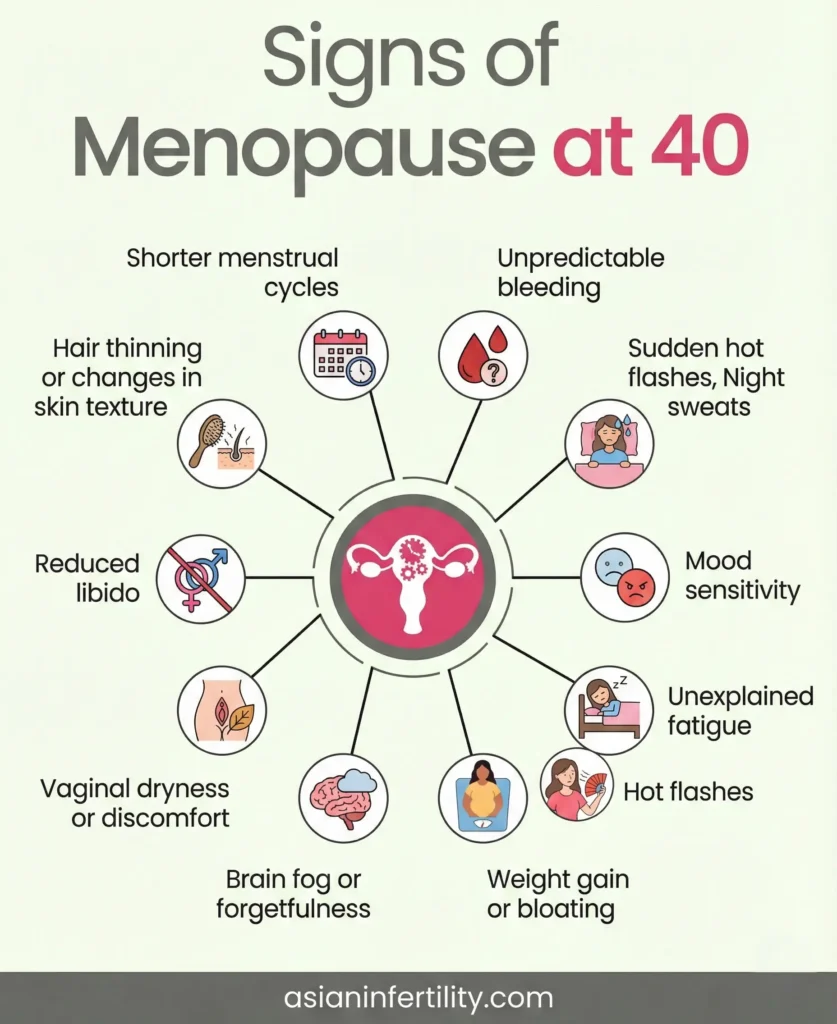
Physiological Changes & Symptoms
- Irregular menstrual cycles
- Hot flashes, night sweats
- Weight gain, slow metabolism
- Joint and muscle pain
- Fatigue and low energy
- Sleep disturbances, insomnia
- Mood swings, irritability
- Dry skin, hair thinning
Sexual Changes & Symptoms
- Vaginal dryness, discomfort
- Reduced sexual desire
- Pain during intercourse
- Decreased natural lubrication
- Difficulty reaching orgasm
- Lower arousal response
- Reduced vaginal elasticity
How to Treat a Woman in Menopause - Modern, Holistic Care
When we speak of how to treat a woman in menopause, it involves a mix of:
1. Lifestyle changes

- Anti-inflammatory diet
- Regular strength training
- Good sleep hygiene
- Stress management (yoga, meditation, journaling)
2. Medical support
- Hormonal therapies (when safe and suitable)
- Supplements like calcium, vitamin D, omega-3
- Screening for bone density and heart health
3. Emotional & relationship support

Because mood swings and physical changes affect self-confidence, thus it is necessary that their partners and family must help them handle the situation with compassion and communication. Good and free interaction, helps a woman feel safe while she moves through this perimenopause and postmenopause phase.
4. Personalized symptom management
Every woman’s menopause symptoms for women are different. At Asian IVF, we suggest hormonal changes with lifestyle habits, some choose natural care and further others may require hormone therapy. The right plan depends on her Menopause Stages, comfort, safety and long-term health. So the best is to consult your doctor and not go for home remedies alone. Why? We are explaining now:
Complications Linked With Menopause
While menopause is natural, unmanaged symptoms and long-term hormonal shifts can lead to complications if not addressed early.
- Bone loss or osteoporosis
- Heart health changes due to cholesterol shifts
- Urogenital dryness or infections
- Sleep disturbances caused by night sweats
- Emotional health fluctuations from mood swings
When to See a Doctor
Come to us if you experience the above symptoms of premature menopause before age 40 or the following things:
- Very heavy bleeding during perimenopause.
- Bleeding after menopause.
- Severe menopause side effects affecting daily life.
- Extreme fatigue, palpitations or sudden anxiety.
- Trouble coping emotionally or physically.
Hope Beyond Hormones - Motherhood Journeys Despite Menopause at Asian IVF

We are now sharing two different cases studies where our patients had a child after their menopausal symptoms began -
- Meera (name changed to retain her privacy) was battling menopause symptoms for women like when she was 39 only. She got married at age 35 and now she feared motherhood was impossible. At Asian IVF, careful evaluation of her menopause stages and hormonal changes led to specific treatment. We helped her conceive through IVF and embrace motherhood at 40 years. She has frozen her eggs and due to that she is hopeful to have another child, even if she hits menopause in totality.
- Gayatri (name changed to retain privacy) came to us at the age of 45. Her periods had completely stopped at a young age. She wanted a second child, but scans revealed that her body was still undergoing critical hormonal changes. We advised her two options:
- Have a surrogate baby via a donor egg and her husband's sperm through IVF.
- We improve her health a bit more under our care and she conceives the child herself via donor egg and her husband's sperm.
She chose the second option and today she is a proud mother of two child.
Final Thoughts
Menopause isn’t an ending, it's just a body transformation towards a wiser, stronger version of yourself. Every woman deserves clarity and compassionate guidance through this stage. Connect with us today and let's deal with it together for you.
FAQs
Can menopause symptoms start even if periods are still regular?Many women experience menopause symptoms during perimenopause, even when periods are still coming regularly. Hormone levels begin fluctuating years before periods stop completely, which can trigger hot flashes, sleep issues, or mood changes early on.
Is it normal for menopause symptoms to come and go suddenly?Yes, this is very common. Menopause symptoms often appear suddenly, disappear, and then return due to fluctuating hormone levels. This unpredictability is normal and does not usually indicate a serious problem.
Which blood tests actually confirm menopause-and which don’t?No single test confirms menopause on its own. FSH, estrogen, and AMH levels can offer clues, but results fluctuate during perimenopause. Diagnosis is best made using a combination of symptoms, age, and medical evaluation.
Can menopause cause anxiety or panic attacks even without hot flashes?Yes. Hormonal changes during menopause can affect brain chemistry, leading to anxiety, low mood, or panic symptoms—even without physical signs like hot flashes. Emotional symptoms are a real and common part of this transition.
How long does perimenopause usually last before menopause starts?Perimenopause typically lasts 4 to 8 years. For some women it may be shorter, while others experience symptoms for longer. Menopause is confirmed once periods stop for 12 consecutive months.
Does early menopause increase the risk of long-term health problems?Yes, it can. Early menopause may increase the risk of bone loss, heart disease, and hormonal imbalances if not managed properly. Early medical guidance helps reduce long-term health risks.