
Progesterone is the “pregnancy hormone.” It prepares the uterus for an embryo to implant well and grow. In IVF, doctors monitor serum progesterone levels very carefully before embryo transfer. Both very low and very high values can hinder IVF success. Today we will make you understand why this happens, its risks and what solutions exist.
What Is High Progesterone Before Embryo Transfer?

In a natural cycle, progesterone rises only after ovulation. But during IVF stimulation, sometimes the hormone increases prematurely. This condition is called high progesterone during IVF stimulation or “premature luteinisation.”
High progesterone = serum progesterone >1.5 ng/mL on the day of the HCG trigger.
For patients, this does not mean treatment has failed. It simply means the endometrial receptivity window may shift. Fresh embryo transfer may not give the best outcome. Doctors like those at AIIM IVF Indore often adapt strategies such as embryo cryopreservation to protect success chances.
How Progesterone Is Measured and What Counts as High
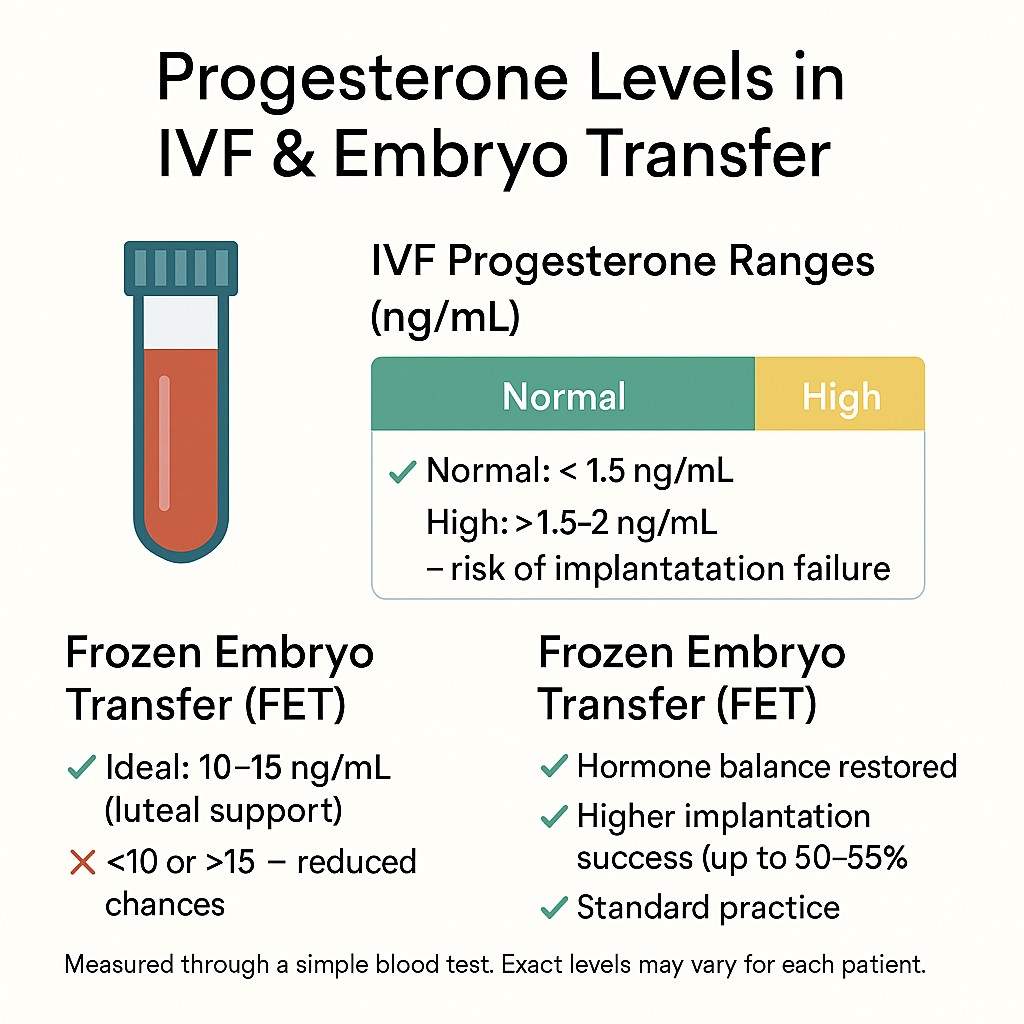
Doctors measure progesterone using a progesterone assay (ng/mL) through a simple blood test. The test is usually done:, keeping in mind that these numbers are guides, not absolutes. Every patient’s response is different:
- On the morning of the HCG trigger shot
- Sometimes again before egg retrieval
- Fresh IVF cycles – above 1.5–2 ng/mL is usually considered high.
- Ideal range for implantation – still debated; no universal agreement among experts.
- Frozen embryo transfer (FET) – 10–15 ng/mL during luteal phase support gives the best outcomes.
Causes of High Progesterone in IVF Cycle
- Intensive ovarian stimulation with high gonadotropin doses can overstimulate follicles.
- Longer stimulation cycles may cause follicles to produce progesterone too early.
- A high number of developing eggs can collectively secrete extra hormones.
- Individual hormonal sensitivity, where some women naturally convert more estrogen into progesterone.
This rise is not a patient’s fault. It is a biological response called premature luteinisation.
- Does not harm egg quality
- May disturb the uterine lining’s preparation.
- Excellent clinics monitor serum progesterone levels closely, especially before deciding on a fresh or frozen transfer.
Symptoms of High Progesterone in IVF
Most women will not feel any different if progesterone is high. The change is usually silent. Occasionally, patients may notice:
- Breast tenderness
- Bloating
- Mood fluctuations
These symptoms can overlap other body issues. So, only a blood progesterone assay can give accurate results. So you will need an expert IVF doctor’s guidance.
Impact on the Endometrium – Why It Really Matters
Progesterone controls the timing of the endometrial receptivity window. In simple words, it is that short period when the uterus is ready to accept an IVF embryo. If progesterone rises too early, the lining becomes “out of phase.”
Doctors explain this as planting a seed in soil that has already dried. The embryo may still be healthy, but the soil (uterus) is no longer at its peak state. This mismatch increases the risk of implantation failure risk factors. It does not mean pregnancy is impossible. But the odds are lower in a fresh cycle when the lining matures too soon. That is why good IVF clinics prefer embryo cryopreservation when progesterone is high.
Risks of Fresh Embryo Transfer with High Progesterone
Several large studies show that high progesterone before fresh transfer reduces live birth rates by 20–40%. The main risks are:
- Implantation failure due to embryo–endometrium mismatch.
- Lower clinical pregnancy rates
- Higher need for repeated cycles
However, not every patient is affected equally. Younger women with good egg quality may still conceive despite high levels. Yet, for the majority, success improves when transfer is delayed. Good IVF doctors focus on securing long-term success, not rushing into a less favorable fresh transfer.
What To Do If Your Progesterone Is High
Remember, the goal is to maximise the chance of a healthy pregnancy:
- Do not panic; high progesterone is common.
- Ask your doctor about the best option: freeze-all or adjusted cycle.
- Focus on the ideal progesterone level for implantation during your planned frozen embryo transfer.
- Trust the science: waiting a little longer usually increases success.
How Indian Clinics Manage High Progesterone with Embryo Freezing
- High progesterone does not stop parenthood. In India, most IVF clinics freeze embryos if progesterone is high.
- Doctors use advanced blastocyst vitrification to keep embryo quality safe.
- In the next cycle, they plan a careful frozen embryo transfer protocol.
- They add proper progesterone supplementation for FET.
- Success rates with FET are rising.
Why Embryo Freezing is the Best Solution to Manage High Progesterone
Modern embryo cryopreservation techniques, especially blastocyst vitrification, are safe and highly effective. When progesterone is high, doctors often recommend freezing all embryos instead of transferring immediately.
Benefits are:
Uterus gets time to return to normal hormone balance
- Transfer can be scheduled in a natural or programmed cycle
- Studies show frozen embryo transfer protocol (FET) can achieve equal or higher pregnancy rates than fresh cycles. For example, research reports live birth rates of up to 50–55% per transfer when embryos are frozen and later transferred with optimal preparation. This is why embryo freezing when progesterone is high is now standard practice worldwide.
Progesterone Management Options Beyond Just Embryo Freezing
While embryo freezing when progesterone is high is the gold standard, other medical strategies also exist:
- Switching to GNRH antagonist cycles to reduce premature rise
- Adjusting the day of HCG trigger to shorten stimulation
- Monitoring hormone levels earlier to detect changes
- Using mild stimulation protocols in sensitive women
These approaches aim to:
- Prevent progesterone from rising too soon in future cycles.
- Help patients who cannot afford or access embryo freezing easily.
Emotional and Financial Considerations
For patients, freezing embryos can feel like a delay. It means additional storage costs and waiting longer for transfer. Emotionally, this can be frustrating after weeks of injections and procedures.
However, looking at the bigger picture, the improved success rates often outweigh these burdens. IVF experts encourage couples to view freezing as an investment towards achieving pregnancy.
CTA: Wish for the best success in managing high progesterone before embryo transfer? Choose AIIMS IVF. Expert care. Accurate testing. Advanced embryo cryopreservation. Personalised frozen embryo transfer protocols. Trust science. Trust us, connect today!


