Can Tuberculosis Cause Infertility? - Fallopian Tube TB & Uterine TB Explained
Tuberculosis (TB) is more than just a cough and fever. Many couples often ask us a common thing - Can tuberculosis cause infertility?
-
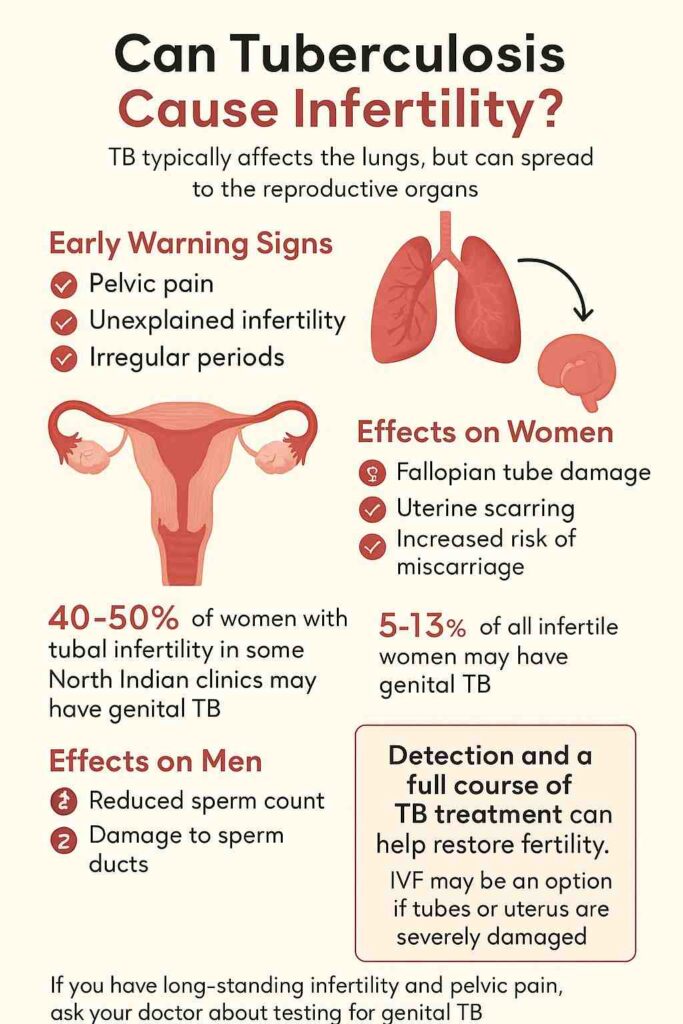
- In some fertility clinics in North India, fallopian tube tuberculosis or genital TB is found in nearly 40–50 % of women who come for tubal factor infertility. Indian Journal of Medical Research
-
- Studies show among infertile women, 5-13 % may have genital tuberculosis. Indian Journal of Medical Research
So TB does affect fertility, but not always and often with early detection and treatment. Let's now understand - how TB affects fertility, what you should watch out for and what options exist.
What is Tuberculosis And How It Spreads?
Tuberculosis (TB) is a bacterial infection that is air-borne, spreading via coughing or sneezing of an affected person. It usually finds its roots in the lungs. From there, TB bacteria may travel through blood or lymph to other body parts-like the reproductive organs.
Genital tuberculosis often comes without obvious symptoms. People may not feel sick until difficulty with pregnancy shows up.
Symptoms of reproductive TB - irregular menses, discharge, abdominal pain.
How TB Affects Reproductive Health in Men & Women
- In women, TB may infect the uterus, fallopian tubes or endometrium. It may cause blockage, scar tissue or damage that prevents pregnancy. This is one way TB affects reproductive health.
- In men, TB may affect the testicles, epididymis or the tubes that carry sperm. It can reduce sperm count, motility or cause other issues. Understanding what these sperm parameters mean in reports is helpful — check our guide on [How to Read a Semen Analysis Report – Full Guide with Chart]. Together, these lead to male infertility and tuberculosis related problems.
- TB may also weaken general body health, which makes it harder to conceive. If untreated, it may cause long-term damage even when infection seems gone.
Female Infertility - Fallopian Tube Tuberculosis & Uterine TB
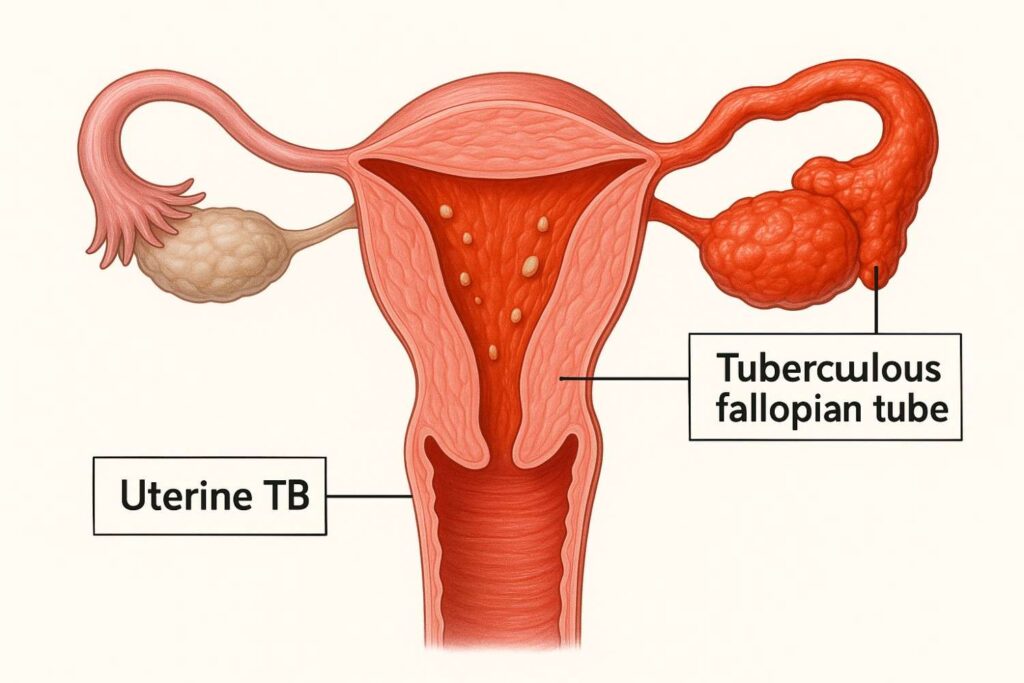
One major form is fallopian tube tuberculosis. The fallopian tubes are where the egg mates with the sperm, also from here the embryo travels to the uterus. If tubes are blocked or damaged by TB infection, you won’t get pregnant. This type of TB infection in fallopian tubes is severe. Conditions such as hydrosalpinx — where fluid fills and damages a fallopian tube — can have very similar effects on fertility and IVF success; see our article on Hydrosalpinx and IVF – The Journey from Diagnosis to Success for more on that.
Also, endometrial TB and infertility happen when the lining of the uterus is affected. Even if tubes are open, if the endometrium is damaged by TB, the embryo may not implant.
Women may have irregular periods, pain or little discharge—but sometimes no symptoms at all. These are part of symptoms of reproductive TB. Diagnosis often happens when couples seek help for female infertility due to TB.
Male Infertility & TB
Men may also suffer infertility when TB spreads. Infection can reach testes or epididymis, which reduces sperm production. Sometimes hormonal changes happen causing low sperm count or poor quality. So, doctors check both partners.
Men are usually treated via medication, but sometimes surgery or assisted methods are required.
Diagnosis of Reproductive TB
Diagnosis of genital TB is often missed as symptoms are silent. To know if tuberculosis can cause infertility in a specific case, the following tests are done.
Tests in Women
-
- Endometrial biopsy or uterine lining sample to look for bacteria or granulomas.
-
- Laparoscopy to see health of fallopian tubes, uterus, ovaries.
-
- Tests like PCR, GeneXpert, culture of samples.
-
- Hysterosalpingogram to see whether fallopian tubes are blocked.
Tests in Men
-
- Semen test for TB bacteria
-
- Ultrasound of scrotum, epididymis
-
- Biopsy of affected genital tissue
-
- Urine culture for TB detection
-
- PCR test for TB confirmation
Treatment & Fertility Options (Medical + IVF/ICSI)
Treatment for reproductive TB focuses first on killing the infection. Anti-tuberculosis treatment (ATT) and fertility support go together. ATT usually involves several medicines over many months.
If damage is mild, medication plus rest and nutrition may help restore function. But if tubes are badly blocked or the uterus severely scarred, natural pregnancy may be unlikely. Then IVF after tuberculosis may be advised. Doctors may also use surgery to open blocked tubes or repair damaged tissues.
Pregnancy After TB Treatment – Is It Possible?
Yes, pregnancy after TB treatment is often possible. But chances depend on how early the disease was found, how badly organs were damaged and whether treatment was completed. Couples often worry chances of pregnancy after TB are zero-but many do conceive after treatment.
In India, studies show women with female genital tuberculosis have about 34.86 % prevalence among infertile women. Tubal factor infertility linked to TB may be high. With good care, IVF and medical treatment improve outcomes.
Preventing & Managing Reproductive TB
Take following steps to lower risk (men & women):
– Finish the full course of TB medicines, even if it's any other TB form.
– Immediately reach an expert if you have symptoms like irregular menses, discharge, abdominal pain.
– Take nutritious food, maintain hygiene and avoid bad habits. These weaken immunity to TB.
Managing Reproductive TB- Regular check-ups even after treatment, fertility counselling and when needed, using assisted technologies.
Myths vs Facts
| Myth | Fact |
| TB always causes infertility. | Many people with TB have no infertility. Damage depends on which organs are involved and how early treatment starts. |
| Once TB is treated, everything is fine. | Treatment cures infection, but damage (scarred tissue, blocked tubes) may remain. |
| Only women are affected by reproductive TB. | Men also can suffer male infertility and tuberculosis. |
| IVF always works after TB. | IVF may help, but success depends on damage extent. |
CTA
Early diagnosis, full treatment, good care and sometimes IVF or other fertility help can make pregnancy after TB treatment possible. Be brave: talk to our experts, get tested and plan together. Hope and help are real.
FAQs
What symptoms of reproductive TB should prompt tests?Irregular periods, unusual discharge, lower belly pain, fertility problems or history of TB elsewhere in the body are signs.
How soon after treatment can we try for pregnancy?After finishing ATT, doctors usually wait for healing and check organ function. This may take several months.
Can TB-caused damage reverse fully?Some damage (scars, blockages) cannot be reversed. Early detection gives better chances for repair or use of IVF after tuberculosis.
Can a man with TB father a child naturally after treatment?Sometimes yes. If sperm counts recover and there is no permanent damage. In severe cases, assisted methods may be needed.